

Welcome to Second Story, a newsletter for people who love prewar apartments and social clubs. New here? Join the old house family below! — Robert
On this gloomy and slightly chilly fall Sunday, wouldn’t it be lovely to lounge around a large apartment with multiple fireplaces? Leaving to socialize wouldn’t be required, because your six closest friends would be your neighbors—the only other tenants in the building.
And when you’re ready for dinner, either ring down to the communal, fully staffed kitchen and have something brought up via dumbwaiter, or meet your friends downstairs in the impressively grand common drawing room and equally beautiful dining room, lit by soaring windows. After all, it’s for the exclusive use of those who live in the building.
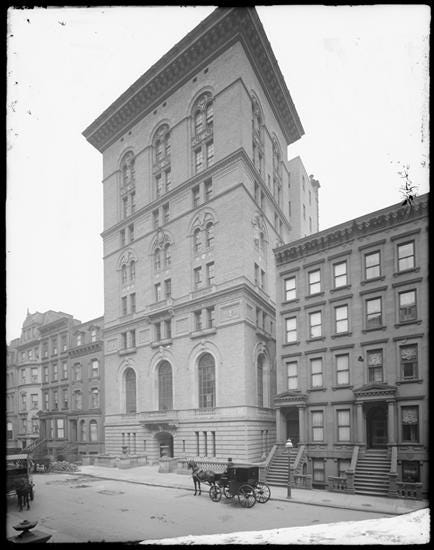
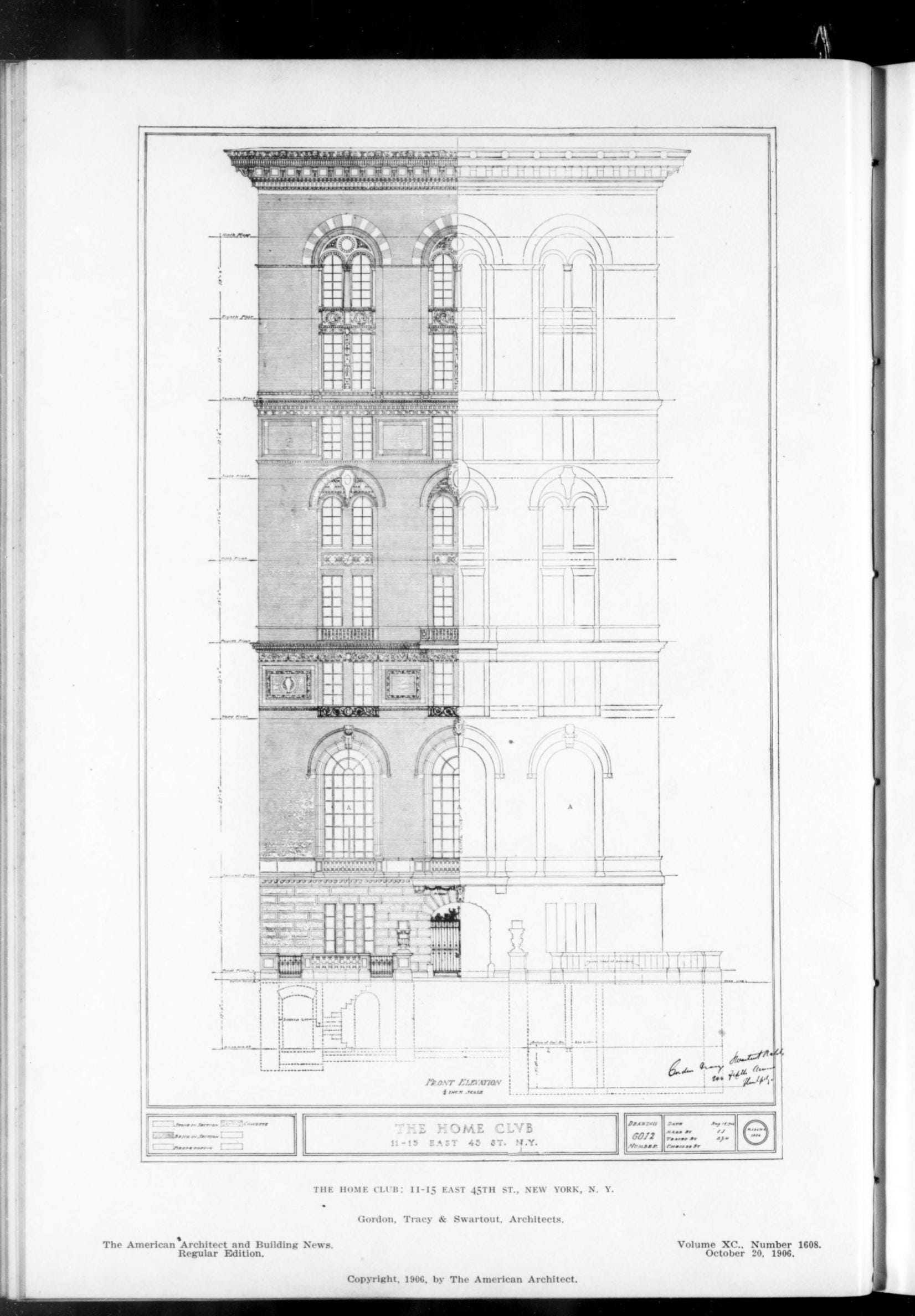
Sound like a dream? That’s what life was like at the aptly named Home Club, an innovative early apartment house at 11 East 45th Street. Completed in 1905, the stately interpretation of Florentine architecture stood only for a few years before a rapidly changing midtown Manhattan forced it to morph, too. The building managed to survive all the way until it was demolished in 2000, then a faint suggestion of the dramatic building it once was.
An apartment house ahead of its time
1n 1905, successful Wall Streeter Pliny Fisk had a problem: He had a home in Rye, NY and a desire for a Manhattan residence that was as impressive as his friends’ townhouses—with a fraction of the upkeep.
Apartment living in the city was still very much in its infancy. Sure, buildings like The Dakota and The Osborne had made progress toward raising the apartment to an acceptable form of living for the wealthy, but the standard was still a single-family home, which understandably was a lot of work to staff and maintain.